
Risk Rapid price moves can close a leveraged position sooner than planned.
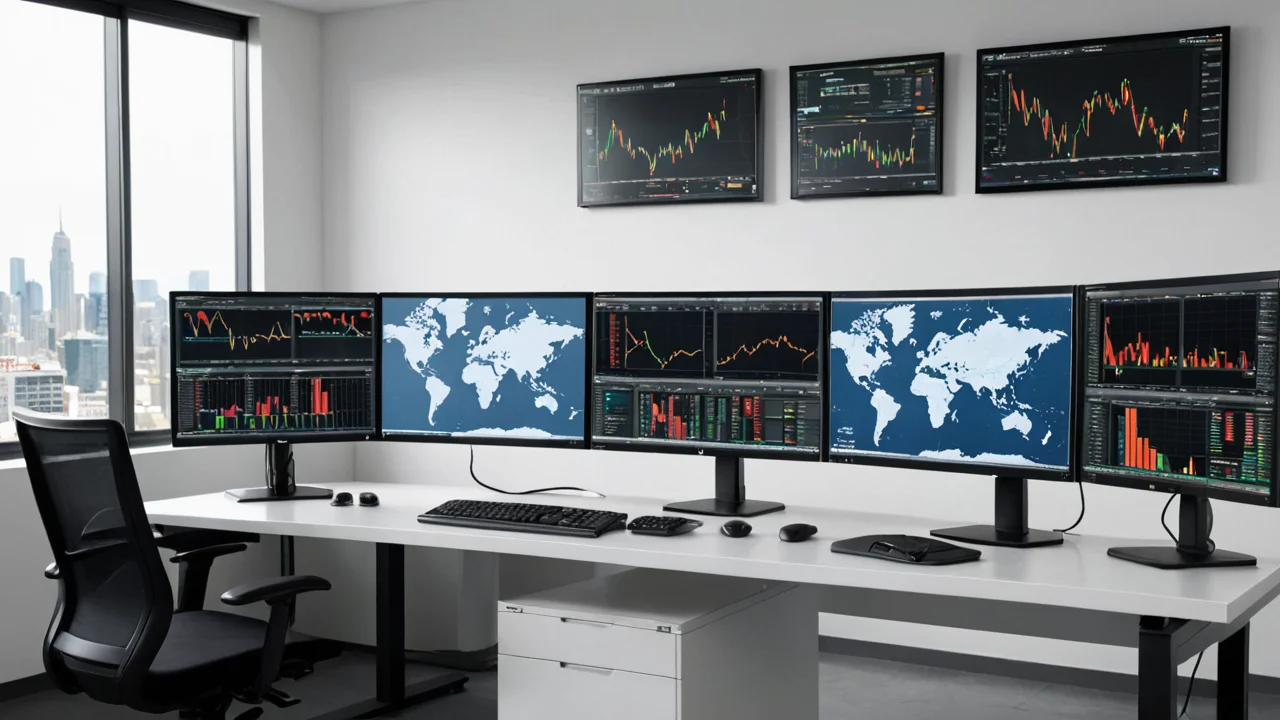
The web platform is where Geojit's pricing becomes visible: a flat Rs 20 per executed intraday and F&O trade sits next to Rs 0 delivery, which means the cost curve flattens hard for anyone trading more than a few lots a day. That single number, Rs 20, is the most useful metric on this page, because it tells you where the platform is built to win and where it is not.
Geojit Financial Services Ltd. runs this terminal out of Kochi, Kerala, as a SEBI-registered member of NSE and BSE and a NSDL/CDSL depository participant. It is a domestic, exchange-linked shop, not an offshore CFD desk.
What the web terminal runs on
The platform is browser-based and pairs with the Selfie mobile app, so positions opened on the desktop view carry into the phone. Instruments available through it:
- Equity cash and delivery
- Futures and options on NSE and BSE
- Exchange-traded currency derivatives
- Commodity segments
- Mutual funds, IPO applications, insurance and PMS
Base currency is INR and settlement is domestic, so there is no FX conversion layer sitting between your bank account and your trade.
| Parameter | Geojit web platform |
|---|---|
| Access | Browser-based, no install |
| Mobile companion | Selfie app |
| Base currency | INR |
| Settlement | Domestic, exchange-linked |
| Account structure | Demat + Trading (2-in-1) |
| Minimum funding | None stated; account opening Rs 0 |
The 2-in-1 structure matters more than it sounds. Your shares sit in the same account you trade from, so selling delivery holdings does not require a transfer step between two providers.
Order types and what the browser handles
The web interface covers the standard order book: market, limit, stop-loss and bracket-style intraday orders, with positions and holdings on separate tabs. For F&O and currency derivatives, margin requirement updates live against SEBI's peak-margin framework rather than a fixed broker multiplier.
On the web terminal you will see margin blocked per position, and it moves with volatility. A position that fits comfortably on a quiet Monday can demand more margin after a gap.
The cost table that decides most cases
| Charge | Amount |
|---|---|
| Account opening | Rs 0 |
| Delivery trades | Rs 0 |
| Direct mutual funds | Free |
| Intraday and F&O | Flat Rs 20 per trade (plan-based) |
| Annual maintenance (AMC) | ~Rs 400/year |
| Debit transaction | ~0.02%, min Rs 15-20, max Rs 40 |
Read that table as a shape, not a list. Flat per-trade pricing rewards larger positions and punishes small ones: a Rs 20 charge is trivial against a Rs 2 lakh intraday position and painful against a Rs 5,000 one. Delivery at zero does the opposite, which is why long-term holders tend to find this pricing fair and scalpers with tiny size tend not to.
The AMC of roughly Rs 400 a year is where the BSDA (Basic Services Demat) option becomes worth checking. If your holdings value stays modest, that tier can reduce or waive it.
Funding the account from an Indian bank
Deposits run through UPI and net-banking, both domestic INR rails. There is no stated minimum to fund, which means you can open the account and test the interface before committing capital.
| Rail | Typical speed |
|---|---|
| UPI | Near-instant, 24/7 |
| IMPS | Minutes |
| NEFT / RTGS | Same day, batch-dependent |
| Net banking | Bank-dependent |
UPI carries an NPCI ceiling of about Rs 1 lakh per transaction per day, which is the number that matters if you are moving size in one go. Above that, split across rails or use RTGS. Because settlement stays in INR, the withdrawal path back to your bank has no currency conversion step and no exchange-rate spread to absorb.
The fine print worth reading twice
Geojit is a domestic, exchange-linked broker, which means the platform gives you access to listed Indian markets and not to spot forex or offshore CFD products. Those instruments sit outside the permitted framework for Indian residents: RBI and FEMA allow INR-based currency pairs like USD/INR, EUR/INR, GBP/INR and JPY/INR on recognised exchanges, and remitting money abroad for margin forex trading is not a permitted LRS purpose. The RBI's Alert List of unauthorised forex platforms, updated to 95 entities as of 19 November 2025, exists precisely because that boundary is being tested by offshore operators.
If your strategy needs spot SPX500 or leveraged index CFDs, this terminal will not deliver them, and no amount of interface quality changes that. What it also means is that your money never leaves the domestic regulated perimeter, and your tax reporting stays in one jurisdiction instead of two.
Tax treatment follows from that. Exchange-traded currency futures and options profits are generally treated as non-speculative business income at slab rates. Intraday speculative losses can only be set off against speculative income, with a four-year carry-forward, while non-speculative losses carry eight years. Keep the two buckets separate in your records from day one, because reconstructing them a year later is miserable.
If you want a swap-free account, this is a gap: Geojit does not offer one. That is a structural limitation of an exchange-linked Indian broker, not an oversight, and readers who need it should factor that in before opening.

What the first week tends to look like
New accounts usually clear KYC in 24 to 48 hours with a PAN card, Aadhaar or another address proof, and a cancelled cheque or bank proof. Once live, the first real friction is not the interface but the margin behaviour: intraday positions get blocked at SEBI peak-margin levels, and those levels shift with the market. Traders arriving from demo environments with fixed margin assumptions usually resize their first few positions after watching what actually gets blocked.
The second observation from week one is order latency at the open. Exchange-traded Indian markets run 09:00 to 17:00 IST for INR currency derivatives, with cross-currency extending to 19:30 IST. The first minutes after 09:00 carry the widest spreads and the fastest order-book movement, which is where limit orders beat market orders on any browser terminal.
Platform alternatives, briefly
| Route | What you get | What you give up |
|---|---|---|
| Geojit web | INR settlement, flat Rs 20, exchange venues | No spot forex or offshore CFDs |
| Local discount broker | Lower per-trade cost possible | Varies on research and support |
| Offshore terminal | Spot forex, high advertised leverage | Legal exposure for residents |
The offshore column looks attractive on paper and carries the risk on the same page. RBI Master Direction prohibits operating a forex ETP in India without authorisation, and RBI publishes the Alert List the same way. If strict offshore regulation is what you are optimising for, the relevant question is which jurisdiction supervises a given entity and whether its client-money segregation is verifiable, not how high its advertised leverage number is.
What we conclude
Pick it if: you trade listed Indian equity, F&O or INR currency derivatives, you want INR settlement with no conversion layer, and flat Rs 20 per intraday trade suits your average position size. The 2-in-1 structure also fits anyone who wants holdings and trading in one login. Account opening is free and funding has no stated minimum, so the cost of testing it is low.
Pass if: your strategy requires spot forex, offshore CFDs or very high advertised leverage on non-INR pairs, because those sit outside what a SEBI-registered domestic broker can offer you. Pass also if you need a swap-free structure. In those cases the sensible move is to look at more strictly regulated international venues, check the specific regulator and client-fund segregation rules that apply, and confirm the tax and remittance treatment before committing anything.


Questions
Does the web platform have a demo or paper trading mode?
+
Geojit's public materials list the Selfie app and the web trading platform but do not describe a dedicated demo environment. Test the live interface with a small funded position instead: account opening is Rs 0 with no stated minimum, so the cost of a real test is one trade's commission rather than a simulation.
Can I trade from the browser on mobile, or do I need the app?
+
The web terminal is browser-based and works without installing anything, which matters on shared or work machines. The Selfie app exists as the mobile companion, and positions carry across both. For order entry during market hours, the browser handles market, limit and stop-loss orders the same way the app does.
What are the trading hours for the instruments on this platform?
+
NSE INR currency derivatives run 09:00 to 17:00 IST Monday to Friday, with cross-currency derivatives extending to 19:30 IST. Equity and F&O segments follow standard exchange hours. The first minutes after the open carry the widest spreads, so limit orders are the safer entry on any browser interface.